Switzerland Visa From Canada 2027: Complete Guide To Fees, Requirements, Processing Time And Online Process
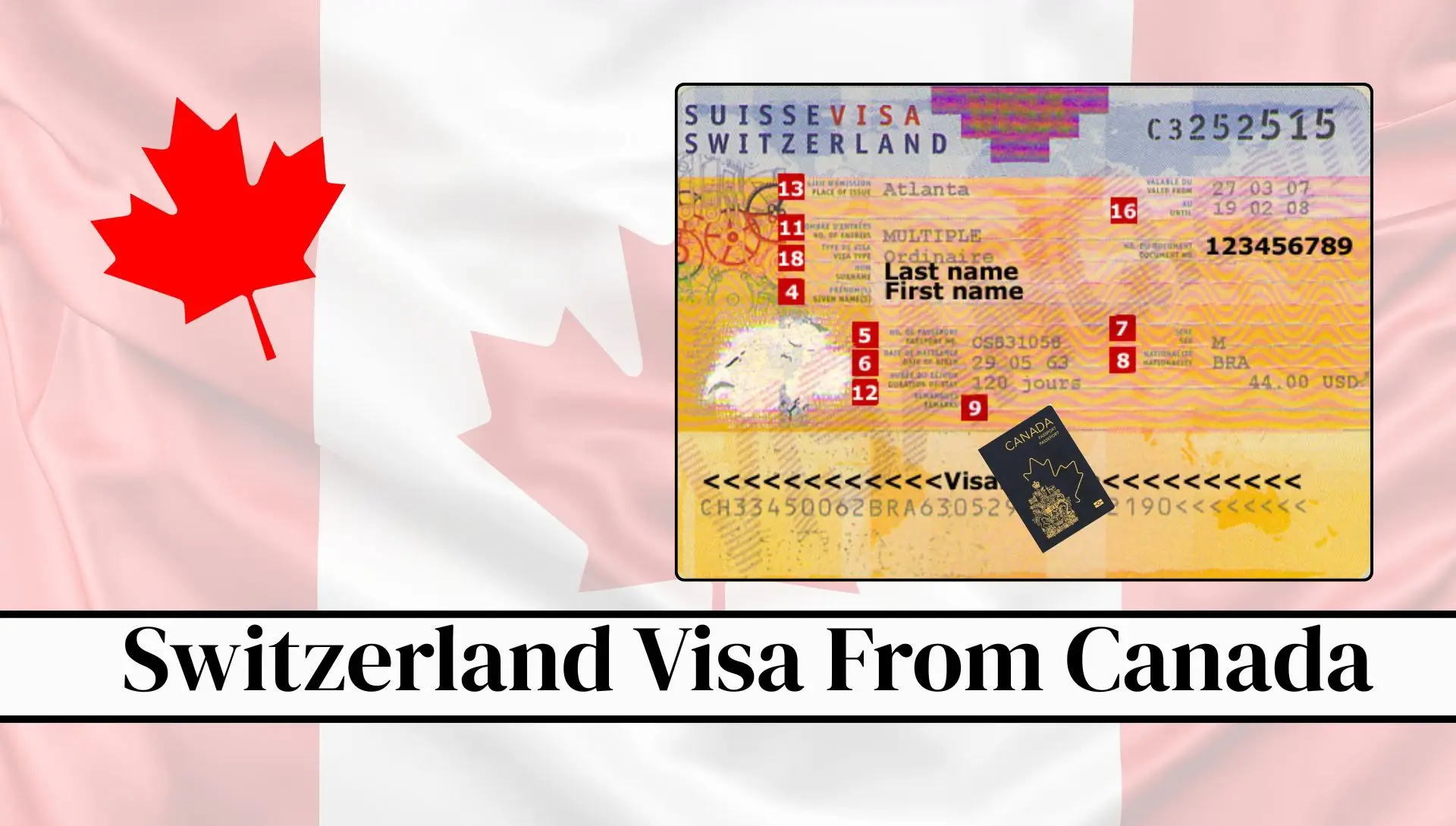
Switzerland Visa From Canada. Switzerland is one of the most beautiful countries in Europe. Every year, thousands of people from Canada visit Switzerland to enjoy its mountains, lakes, cities, and famous tourist attractions. Whether you are planning a holiday, visiting family, attending a business meeting, or moving for work or study, it is important to understand the latest Switzerland visa requirements before your trip.
The good news is that Canadian citizens do not need a visa for short visits to Switzerland. However, this rule does not apply to everyone living in Canada. If you are a foreign national residing in Canada and your nationality requires a Schengen visa, you must apply before travelling.
In this complete guide, you will learn everything about the Switzerland Visa From Canada, including visa requirements, who needs a visa, visa types, required documents, the application process, ETIAS updates and many other important details.
Switzerland Visa Requirements at a Glance
| Requirement | Details |
|---|---|
| Country | Switzerland |
| Schengen Member | Yes |
| Canadian Citizens | Visa-Free (Up to 90 Days) |
| Maximum Stay | 90 Days within 180 Days |
| Passport Validity | At least 3 months after departure |
| Passport Age | Issued within the last 10 years |
| Blank Passport Pages | Minimum One |
| ETIAS | Expected to become mandatory in late 2026 |
| Long Stay Visa | Required for stays over 90 days |
| Application Time | Up to 6 Months Before Travel |

Do Canadians Need a Visa for Switzerland?
The answer depends on your nationality and your travel plans.
If you are a Canadian citizen, you do not need a visa for tourist or business visits to Switzerland that are up to 90 days within any 180-day period.
This allows Canadians to enjoy short vacations, business meetings, family visits, or sightseeing without applying for a Schengen visa. However, if you plan to:
- Work in Switzerland
- Study for more than 90 days
- Join family members
- Stay longer than 90 days
you must apply for the appropriate Swiss National Visa (Type D) before travelling.
Who Needs a Switzerland Visa From Canada?
Although Canadian passport holders enjoy visa-free travel, many people living in Canada are not Canadian citizens.
If you are living in Canada on a:
- Work Permit
- Study Permit
- Permanent Resident Card
- Temporary Resident Permit
your visa requirement depends on the passport you hold.
Many foreign nationals living in Canada must apply for a Schengen Visa before entering Switzerland.
Understanding Switzerland’s Visa System
Switzerland offers two main visa categories depending on how long you plan to stay.
| Visa Type | Purpose | Maximum Stay |
|---|---|---|
| Schengen Visa (Type C) | Tourism, Business, Family Visit | Up to 90 Days |
| National Visa (Type D) | Study, Work, Family Reunification | More Than 90 Days |
Choosing the correct visa type is very important because each has different requirements and application procedures.
Switzerland Schengen Visa (Type C)
The Schengen Visa, also called the Type C Visa, is designed for short-term visits.
It allows eligible travelers to enter Switzerland and other Schengen countries for up to 90 days within a 180-day period. This visa is commonly used for:
- Tourism
- Family visits
- Visiting friends
- Business meetings
- Conferences
- Medical treatment
- Cultural events
- Short training courses
Applications for the Schengen Visa can usually be started online before submitting your documents at the authorized visa application center.
Switzerland National Visa (Type D)
If you plan to stay in Switzerland for more than three months, you will need a National Visa (Type D).
This visa is required for people who are moving to Switzerland for:
- Employment
- Higher education
- Family reunification
- Long-term research
- Permanent relocation
Unlike the Schengen Visa, National Visa applications are submitted directly through the responsible Swiss representation.
Processing times are generally longer because additional approvals may be required from Swiss authorities.
General Rules for Switzerland Visa Applications
Before starting your application, you should know these important rules.
You can apply up to six months before travel.
Swiss authorities allow travelers to submit visa applications as early as six months before the planned travel date.
Applying early is recommended, especially during busy travel seasons.
Appointment booking is free.
Scheduling an appointment at the Swiss representation or authorized visa center does not require any payment.
Waiting periods may apply.
Some Swiss visa offices receive a high number of applications, so appointment availability may vary depending on the season.
Always check the responsible visa office before making travel arrangements.
Where Can You Apply for a Switzerland Visa From Canada?
Depending on your place of residence in Canada, you may submit your application through one of the following options.
1. Swiss Representation
Some applicants submit their applications directly to the official Swiss Embassy or Consulate.
2. Swiss Online Visa Portal
For many short-term visas, applicants can complete the online visa application before attending their appointment.
3. VFS Global Visa Application Centre
Most short-term visa applicants in Canada submit their documents and biometrics through VFS Global.
These centers collect your application and forward it to the Swiss authorities for processing.
4. Another Schengen Country
In certain situations, another Schengen country’s representation may process Switzerland visa applications on behalf of Switzerland.
Switzerland Visa Application Centers in Canada
Applicants usually submit biometric data and supporting documents through VFS Global. Different provinces fall under different processing offices.
| Province or Territory | Processing Office |
|---|---|
| British Columbia | Vancouver |
| Alberta | Vancouver |
| Saskatchewan | Vancouver |
| Yukon | Vancouver |
| Northwest Territories | Vancouver |
| Ontario | Ottawa |
| Quebec | Montreal |
| Atlantic Provinces | Montreal |
Always confirm your correct visa center before booking an appointment.
Documents Required For Switzerland Visa From Canada
Preparing complete documents increases your chances of a smooth application process.
The required documents may vary depending on your visa type, but applicants are generally asked to provide:

- A completed visa application form
- A valid passport
- Recent passport-size photographs
- Proof of legal residence in Canada (if applicable)
- Travel itinerary
- Confirmed return flight reservation
- Hotel booking or accommodation details
- Proof of sufficient financial funds
- Travel medical insurance
- Employment or study documents
- Invitation letter (if visiting family or friends)
- Supporting documents showing the purpose of travel
Swiss authorities may request additional documents if needed.
Passport Requirements for Switzerland Travel
Your passport is one of the most important documents when travelling to Switzerland. Even if you do not need a visa, your passport must meet the entry requirements set by Swiss immigration authorities. Your passport should:
- Be valid for at least three months after your planned departure from the Schengen Area.
- Have been issued within the last 10 years.
- Contain at least one blank page for entry and exit stamps if required.
- Be in good condition without damaged or missing pages.
If your passport does not meet these conditions, you may be denied boarding by your airline or refused entry into Switzerland.
Proof of Sufficient Funds
Swiss immigration officers may ask travelers to prove they have enough money to cover their stay. You can show financial proof through:
- Recent bank statements
- Salary slips
- Credit card statements
- Sponsorship letter (if someone else is paying)
- Proof of prepaid accommodation
Having sufficient financial resources shows that you can support yourself during your trip without needing public assistance.
Proof of Accommodation
Applicants should also provide information about where they will stay in Switzerland. Accepted documents include:
- Hotel reservation
- Airbnb booking confirmation
- Invitation letter from family or friends
- Rental agreement (if applicable)
The accommodation details should match the travel dates mentioned in your application.
Travel Medical Insurance
Most applicants who need a Schengen visa must purchase travel medical insurance before travelling. Your insurance should:
| Requirement | Details |
|---|---|
| Coverage Area | Entire Schengen Area |
| Medical Coverage | Minimum €30,000 |
| Emergency Treatment | Included |
| Hospital Care | Included |
| Emergency Repatriation | Included |
Always choose a trusted insurance provider and keep a copy of your insurance certificate with you while travelling.
Confirmed Return or Onward Ticket
Swiss authorities may ask for proof that you intend to leave Switzerland before your permitted stay ends.
Examples include:
- Return flight ticket
- Onward travel reservation
- Travel itinerary showing your departure
This requirement helps confirm that your visit is temporary.
Proof of Travel Purpose
The documents you submit should clearly explain why you are visiting Switzerland.
Examples include:
For Tourism
- Hotel bookings
- Sightseeing itinerary
- Tour reservations
For Business
- Invitation letter from a Swiss company
- Conference registration
- Business meeting schedule
For Family Visit
- Invitation letter
- Copy of host’s passport or residence permit
- Relationship documents if requested
Providing clear supporting documents helps visa officers understand your travel plans.
Switzerland Visa Application Process From Canada
Applying for a Switzerland visa is simple if you follow each step carefully.
Step 1: Check Whether You Need a Visa
Before starting your application, confirm whether your nationality requires a visa.
Canadian citizens travelling for short visits usually do not need a visa, while many foreign nationals living in Canada do.
Step 2: Choose the Correct Visa Type
Select the visa that matches your purpose of travel.
- Tourist Visa
- Business Visa
- Family Visit Visa
- Student Visa
- Work Visa
- National Visa (Type D)
Choosing the wrong visa category may delay your application.
Step 3: Complete the Visa Application Form
Applicants for short stays can begin their application online through the Swiss Visa Portal.
Long-stay applicants must complete the National Visa application and submit it through the responsible Swiss representation.

Check all details carefully before submitting the form.
Step 4: Book an Appointment
After completing the application, schedule an appointment with the appropriate Swiss visa office or VFS Global center.
Appointment booking is free, but available dates may vary depending on the season. Applying several weeks before your travel date is recommended.
Step 5: Prepare Your Documents
Collect all required supporting documents before your appointment.
Arrange them neatly and ensure every document is complete and up to date. Missing documents may delay processing.
Step 6: Attend Your Appointment
Visit the visa application center on the scheduled date. Bring:
- Passport
- Application form
- Supporting documents
- Passport photos
- Appointment confirmation
Applicants may also provide biometric information if required.
Step 7: Submit Biometrics
Most Schengen visa applicants must provide:
- Fingerprints
- Digital photograph
Biometric information helps verify the applicant’s identity.
Some applicants who recently submitted biometrics for a Schengen visa may not need to provide them again, depending on eligibility.
Step 8: Wait for Processing
After submission, your application will be reviewed by Swiss authorities. Processing time varies depending on:
- Time of year
- Application volume
- Additional document requests
- Individual case review
Avoid booking non-refundable travel arrangements until your visa decision has been made.
When Should You Apply?
The Swiss government allows applicants to submit visa applications up to six months before their intended travel date. Applying early offers several advantages:
- More appointment availability
- Enough time to provide additional documents if requested
- Reduced stress before departure
- Better travel planning
During holiday seasons, appointment slots can fill quickly.
ETIAS – New Travel Requirement for Visa-Free Travelers
A major travel update is expected for visa-exempt travelers visiting the Schengen Area. The European Travel Information and Authorisation System (ETIAS) is planned to become operational in the last quarter of 2026.
ETIAS is not a visa.
Instead, it is an electronic travel authorization that eligible travelers must obtain before boarding their flight. This new requirement will apply to visa-exempt travelers, including Canadian citizens.
Who Will Need ETIAS?
Once introduced, ETIAS will generally apply to:
- Canadian citizens
- American citizens
- Australian citizens
- Japanese citizens
- Other visa-exempt nationalities travelling to the Schengen Area
Applicants will complete an online application before travelling.
Once approved, the authorization will be linked electronically to the traveler’s passport.
Benefits of ETIAS
ETIAS is designed to improve border security while making travel easier for eligible visitors. Some expected benefits include:
- Faster border checks
- Online application process
- Enhanced security screening
- Easier travel within participating Schengen countries
Remember that ETIAS does not replace a passport. Travelers must still meet all other entry requirements.
Important Reminder for Canadian Travelers
Even though Canadian citizens currently enjoy visa-free travel for short stays, they should stay informed about ETIAS implementation before planning future trips.
Checking the latest travel updates before departure is always a good idea, as entry requirements may change over time.
Switzerland Tourist Visa From Canada
A Switzerland Tourist Visa is required only for travelers who are not visa-exempt and wish to visit Switzerland for tourism. Canadian citizens can travel to Switzerland without a visa for stays of up to 90 days within a 180-day period.
Tourists visit Switzerland for many reasons, including:
- Exploring the Swiss Alps
- Visiting Zurich, Geneva, Lucerne, and Interlaken
- Ski holidays
- Honeymoon trips
- Family vacations
- Cultural festivals
- Scenic train journeys
If you are a foreign national living in Canada whose nationality requires a Schengen visa, you must apply for a Type C Tourist Visa before your trip.
Switzerland Business Visa From Canada
A Switzerland Business Visa is intended for individuals travelling for short-term business activities. Common reasons include:
- Business meetings
- Conferences
- Trade fairs
- Corporate events
- Client meetings
- Professional training
- Business negotiations
Canadian passport holders usually do not need a visa for these activities if their stay does not exceed 90 days.
However, they should still carry documents proving the purpose of their business trip. These may include:
- Business invitation letter
- Conference registration
- Employer letter
- Meeting schedule
- Hotel reservations
Switzerland Long-Stay Visa (Type D)
Anyone planning to stay in Switzerland for more than 90 days must apply for a National Visa (Type D). This visa is commonly issued for:
Employment
People who have secured a job in Switzerland.
Higher Education
Students enrolled at Swiss universities or educational institutions.
Family Reunification
Individuals joining spouses or close family members legally residing in Switzerland.
Research Programs
Researchers participating in long-term academic projects.
Unlike short-stay visas, Type D applications are submitted directly through the responsible Swiss representation.
Can You Extend Your Stay in Switzerland?
Visitors entering Switzerland without a visa or on a Schengen Visa are generally allowed to remain for up to 90 days within any 180-day period.
If you wish to stay longer, you cannot simply extend your tourist stay in most cases. Instead, you may need to:
- Return to your home country.
- Apply for the correct long-stay visa.
- Obtain approval from the relevant Swiss authorities if an exceptional situation applies.
Always follow the immigration rules to avoid penalties or future travel issues.
Switzerland Visa Processing Time

Visa processing times vary depending on:
- The season
- Number of applications
- Completeness of documents
- Individual circumstances
Here is a general estimate:
| Visa Type | Estimated Processing Time |
|---|---|
| Schengen Visa (Type C) | Around 15 calendar days |
| National Visa (Type D) | Several weeks to a few months, depending on the case |
If additional checks are required, processing may take longer. Applying well in advance of your planned travel date is recommended.
Tips For a Successful Switzerland Visa Application
Submitting a complete and accurate application can improve your experience. Here are some useful tips:
- Apply early, especially during busy travel seasons.
- Complete the application form carefully.
- Ensure your passport meets all validity requirements.
- Submit clear and genuine supporting documents.
- Provide accurate travel dates.
- Show enough financial resources.
- Purchase valid travel medical insurance if required.
- Attend your appointment on time.
- Keep copies of all submitted documents.
Being well prepared helps reduce unnecessary delays.
Common Reasons for Switzerland Visa Refusal
Although many applications are approved, some may be refused if important requirements are not met. Common reasons include:
- Incomplete application form.
- Missing supporting documents.
- Insufficient financial proof.
- Invalid or damaged passport.
- Unclear purpose of travel.
- Inconsistent travel information.
- Doubts about returning after the visit.
- False or misleading information.
Before submitting your application, review every document carefully.
Important Travel Tips Before Flying to Switzerland
Whether you need a visa or not, preparing before your trip is always helpful. Remember to:
- Check your passport validity.
- Carry printed copies of hotel bookings.
- Keep return flight details with you.
- Carry proof of financial support.
- Save emergency contact numbers.
- Confirm airline boarding requirements.
- Review the latest entry rules before departure.
Border officers may request supporting documents even if you are visa-exempt.
Advantages of Visiting Switzerland
Switzerland is one of Europe’s most popular travel destinations. Some reasons why travelers love Switzerland include:
- Beautiful mountain scenery
- Clean and safe cities
- World-famous ski resorts
- Excellent public transport
- Historic towns
- Delicious Swiss chocolate and cheese
- Stunning lakes
- Friendly environment for tourists
Whether you’re visiting for leisure or business, Switzerland offers unforgettable experiences.
FAQs
Do Canadian citizens need a visa for Switzerland?
No. Canadian citizens do not need a visa for tourist or business visits of up to 90 days within a 180-day period.
Can permanent residents of Canada travel to Switzerland without a visa?
Not always. Permanent residents must follow the visa rules based on the nationality of the passport they hold. Some passport holders need a Schengen visa before travelling.
Where do I apply for a Switzerland visa in Canada?
Most short-term applicants submit their documents and biometrics through VFS Global visa application centres. Long-stay visa applications are handled by the appropriate Swiss representation.
Is ETIAS a visa?
No. ETIAS is an electronic travel authorization for eligible visa-exempt travelers. It is expected to become mandatory before travel to the Schengen Area once implemented.
Can I work in Switzerland with a tourist visa?
No. A tourist visa or visa-free entry does not allow employment. You must obtain the appropriate work authorization and, if required, a National Visa (Type D).
Conclusion
Travelling from Canada to Switzerland is straightforward when you understand the latest entry requirements. Canadian citizens can enjoy visa-free travel for short tourist or business visits of up to 90 days within a 180-day period, while many foreign nationals living in Canada may need to apply for a Schengen Visa (Type C) before departure.