Europe Visa From Canada 2027: Complete Guide To ETIAS, Requirements, Fee And Application Process
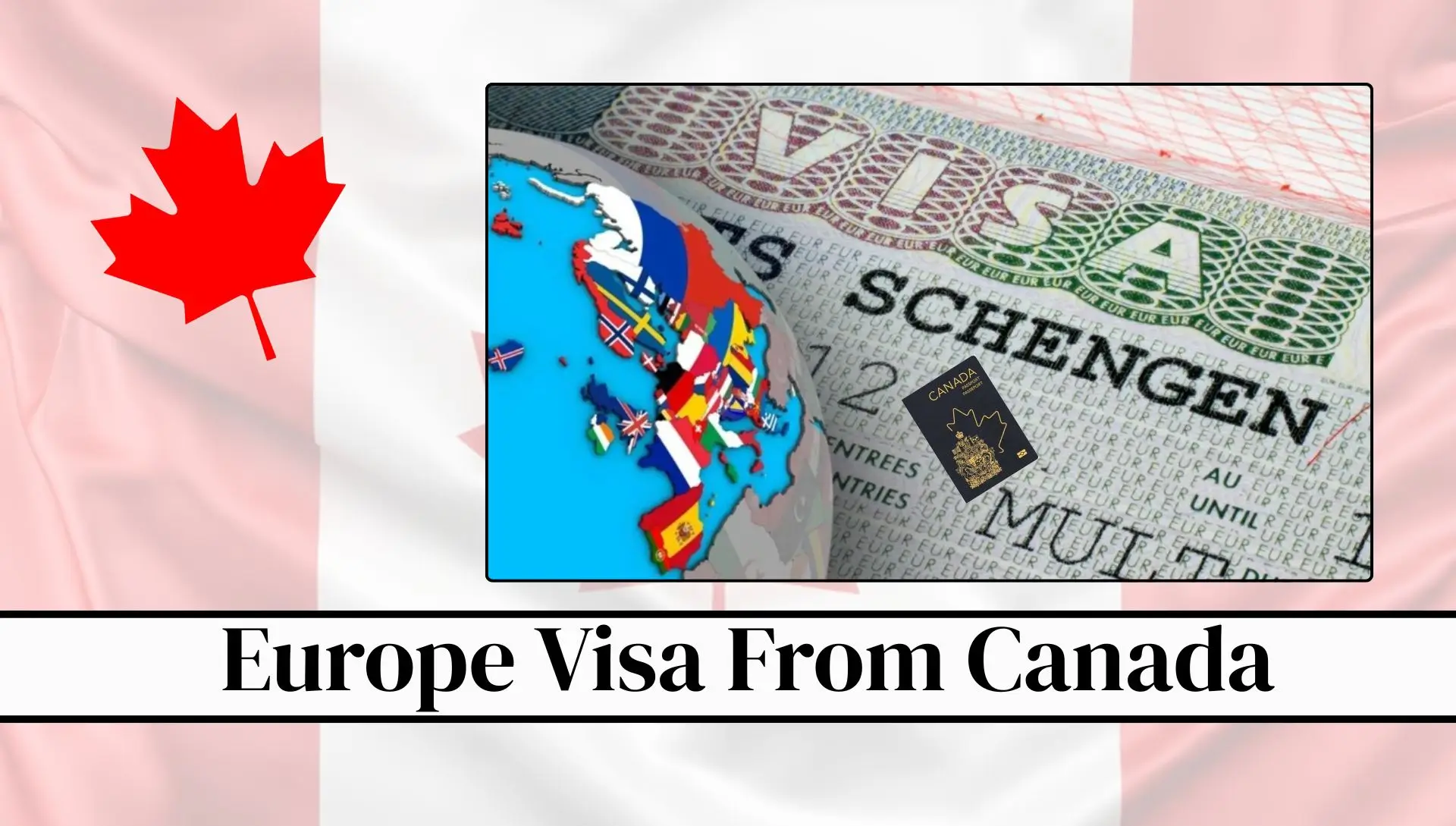
Europe Visa From Canada 2027. Planning a trip from Canada to Europe? Whether you want to enjoy the beautiful streets of Paris, explore Italy, relax in Spain, or visit Germany for business, understanding the latest European travel rules is very important.
The good news is that Canadian citizens can travel to many European countries without applying for a traditional visa for short visits. However, Europe has introduced new digital border systems like the Entry/Exit System (EES), and the European Travel Information and Authorisation System (ETIAS) will also become an important travel requirement after its official launch.
This detailed guide explains everything you need to know about traveling from Canada to Europe, including visa requirements, Schengen countries, ETIAS, EES, required documents, application steps, fees and useful travel tips.
Quick Overview of Europe Visa From Canada
| Topic | Details |
|---|---|
| Visa Required for Canadian Citizens | No (Up to 90 Days) |
| Maximum Stay | 90 Days Within 180 Days |
| Passport Validity | Minimum 3 Months After Departure |
| ETIAS | Expected in Late 2026 |
| Entry/Exit System (EES) | Operational |
| Biometric Collection | Yes |
| Long Stay | National Visa Required |
| Work & Study | Long-Term Visa Required |
Do Canadians Need a Visa to Visit Europe?
For most short trips, Canadian passport holders do not need a Schengen visa. You can travel to participating Schengen countries for:
- Tourism
- Business meetings
- Family visits
- Short educational programs
- Cultural events
Your stay must not exceed 90 days within any 180-day period. However, visa-free travel does not allow you to:
- Work
- Start employment
- Stay permanently
- Attend long-term education programs
For these purposes, you must apply for the appropriate national visa before traveling.
What is the Schengen Area?
The Schengen Area is a group of European countries that removed internal border controls between member states.
Once you legally enter one Schengen country, you can usually travel freely to the others without additional passport checks. This makes traveling around Europe much easier for visitors.
Schengen Countries
The Schengen Area currently includes 29 countries:
| Country | Country |
|---|---|
| Austria | Belgium |
| Bulgaria | Croatia |
| Czechia | Denmark |
| Estonia | Finland |
| France | Germany |
| Greece | Hungary |
| Iceland | Italy |
| Latvia | Liechtenstein |
| Lithuania | Luxembourg |
| Malta | Netherlands |
| Norway | Poland |
| Portugal | Romania |
| Slovakia | Slovenia |
| Spain | Sweden |
| Switzerland |
Can Border Checks Still Happen?
Yes. Although the Schengen Area normally has open internal borders, member countries can temporarily restore border controls due to:
- Security concerns
- Public health emergencies
- Major international events
- Immigration control
If this happens, border officers may ask for:
- Passport
- Travel documents
- Hotel bookings
- Return ticket
- Financial proof
Always keep your travel documents with you while traveling within Europe.
Passport Requirements for Europe
Before booking your trip, make sure your passport meets European entry rules.
Your passport must:
- Be valid for at least 3 months after leaving Europe
- Be in good condition
- Have blank pages for border use if required
- Be issued within the last 10 years
Failure to meet these passport rules may result in denied boarding or refused entry.
What is the Entry/Exit System (EES)?
The Entry/Exit System (EES) is Europe’s new digital border management system.
Instead of manually stamping passports, European border officers now record traveler information electronically. The EES helps European authorities monitor:
- Entries
- Exits
- Overstays
- Refused entries
It also improves border security across participating countries.
How Does the EES Work?
When you arrive at a Schengen border, immigration officers will digitally register your travel information. This includes:
- Passport details
- Date of entry
- Date of exit
- Facial photograph
- Fingerprints
All information is securely stored in the EES database.
What Happens at the Airport?
Canadian travelers should expect a slightly different arrival process. After landing, you may:
- Present your passport.
- Scan your passport at a self-service kiosk (if available).
- Provide fingerprints.
- Take a facial photograph.
- Answer a few questions from the border officer.
- Receive permission to enter.
The process usually takes only a few minutes but may increase waiting times during busy travel seasons.
Self-Service Border Kiosks

Many European airports now offer automated kiosks. If you have an electronic passport, you may:
- Scan your passport.
- Complete part of the registration electronically.
- Continue to a border officer for final approval.
These kiosks make the entry process faster and more efficient.
Your Biometric Information
Under the EES, the following biometric information is collected:
| Biometric Data | Purpose |
|---|---|
| Fingerprints | Identity Verification |
| Facial Image | Digital Identification |
Your biometric data is generally stored for three years.
If you return within that period, you usually won’t need to submit your biometrics again unless required by border authorities.
90/180-Day Rule
One of the most important rules for Canadian travelers is the 90/180-day rule. This means you may stay in the Schengen Area for:
- Maximum 90 days
- During any rolling 180-day period
The 180-day period continuously moves forward.
Example
| Visit | Days Stayed |
|---|---|
| January | 20 Days |
| March | 30 Days |
| June | 40 Days |
| Total | 90 Days |
After reaching 90 days, you must leave the Schengen Area until enough days have passed to allow another legal stay. Overstaying can result in:
- Fines
- Deportation
- Future visa refusal
- Entry bans
Therefore, always calculate your travel days carefully.
What is ETIAS?
The European Travel Information and Authorisation System (ETIAS) is a new electronic travel authorization introduced by the European Union. It is not a visa, but it will become a mandatory travel requirement for visa-exempt travelers, including Canadian citizens, before entering most Schengen countries and Cyprus for short stays.
The purpose of ETIAS is to improve border security by screening travelers before they arrive in Europe.
After ETIAS officially launches, travelers should apply online before booking or starting their trip.
How Does ETIAS Work?
The ETIAS application process is completely online and is designed to be simple.

Step 1: Complete the Online Application
Provide:
- Full name
- Date of birth
- Passport information
- Nationality
- Contact information
- Travel-related questions
Step 2: Security Checks
Your information is automatically checked against European and international security databases, including:
- Interpol
- Europol
- Other border security systems
Step 3: Receive Approval
If approved, your ETIAS authorization is electronically linked to your passport.
Step 4: Travel to Europe
When you arrive, immigration officers verify your passport and ETIAS before allowing entry.
Why Was ETIAS Introduced?
The European Union created ETIAS to strengthen border management while keeping visa-free travel simple for eligible visitors.
Main Reasons
| Reason | Benefit |
|---|---|
| Better Border Security | Screens travelers before arrival |
| Faster Immigration | Speeds up border checks |
| Prevent Illegal Immigration | Helps identify overstays |
| Public Safety | Supports crime prevention |
| Better Travel Records | Improves entry and exit monitoring |
Countries Covered by ETIAS
Once ETIAS becomes active, it will apply to most Schengen countries as well as Cyprus. Some examples include:
- France
- Germany
- Spain
- Italy
- Portugal
- Switzerland
- Netherlands
- Belgium
- Greece
- Sweden
- Austria
- Finland
Countries like the United Kingdom and Ireland have separate entry requirements and are not part of the ETIAS system.
Required Documents for a Schengen Visa From Canada
If your nationality requires a Schengen visa, prepare the following documents carefully.
Document Checklist
| Required Document | Purpose |
|---|---|
| Completed Visa Application Form | Official application |
| Passport-Size Photograph | Identity verification |
| Valid Passport | Travel document |
| Proof of Legal Status in Canada | PR Card, Study Permit, or Work Permit |
| Travel Medical Insurance | Minimum €30,000 coverage |
| Visa Fee | Paid during submission |
| Hotel Reservation | Proof of accommodation |
| Flight Itinerary | Planned travel schedule |
| Bank Statements | Financial proof |
| Employment Letter | Confirms employment |
| Invitation Letter (if applicable) | Family or business visit |
| Proof of Residence in Canada | Driver’s licence or utility bill |
Passport Requirements
Your passport should:
- Be valid for at least three months after leaving the Schengen Area.
- Be issued within the last ten years.
- Have at least two blank pages.
- Be in good condition.
Expired or damaged passports may cause your application to be refused.
Travel Medical Insurance
Travel insurance is a mandatory requirement for most Schengen visa applicants. Your policy must:
- Cover the entire Schengen Area.
- Be valid for the whole trip.
- Provide at least €30,000 medical coverage.
- Cover emergency treatment, hospitalization, and repatriation.
Proof of Financial Means
Applicants must show they can afford their trip. Examples include:
- Bank statements from the last three months.
- Employment letter.
- Salary slips.
- Tax documents.
- Sponsor letter (if someone else is paying).
Having sufficient funds helps demonstrate that you can support yourself during your stay.
How to Apply for a Schengen Visa From Canada
Follow these simple steps if you need a Schengen visa.
Step 1: Determine Whether You Need a Visa
Canadian passport holders usually do not need a visa for short visits. Residents of Canada with other nationalities should check the rules for their passport.
Step 2: Choose the Correct Visa Type
Select the visa based on your travel purpose:
- Tourism
- Business
- Family visit
- Medical treatment
- Cultural event
- Study
Step 3: Gather All Required Documents
Ensure every document is complete and accurate before your appointment.
Step 4: Book a Visa Appointment
Schedule an appointment with the embassy, consulate, or authorized visa application center responsible for your destination country.
Step 5: Attend Your Appointment
Bring:
- Original documents
- Passport
- Application form
- Supporting documents
Your fingerprints and facial photograph will also be collected if required.
Step 6: Wait for Processing
Most applications are processed within 15 calendar days, although some cases may take longer if additional checks are needed.
Step 7: Collect Your Passport
Once your application has been decided, collect your passport according to the instructions provided by the visa office.
Spain Schengen Visa Application From Canada
If Spain is your main destination, you must submit your application to the appropriate Spanish Consulate that serves your area in Canada.
General Process
- Complete the application form.
- Prepare supporting documents.
- Book an appointment.
- Attend your appointment in person.
- Submit biometrics.
- Pay the visa fee.
- Wait for processing.
- Collect your passport after the decision.
Applications are generally accepted between six months and fifteen days before your planned travel date.

Visa Processing Time
| Application Type | Estimated Processing Time |
|---|---|
| Standard Schengen Visa | Around 15 Calendar Days |
| Additional Review | Up to 45 Calendar Days |
Processing times may vary depending on the embassy, travel season, and whether extra documents are requested.
Visa Fees
Applicants who require a Schengen visa should expect to pay the applicable visa fee set by the embassy or consulate at the time of application. Always check the latest fee before your appointment, as it may change.
Additional costs may include:
- Travel insurance
- Passport photos
- Courier service (if available)
- Document translation (if required)
Tips for a Successful Visa Application
To improve your chances of approval:
- Complete every section of the application form.
- Submit genuine documents.
- Provide accurate financial information.
- Purchase travel insurance that meets Schengen requirements.
- Apply well before your travel date.
- Double-check passport validity.
- Keep copies of all submitted documents.
Long-Term Stay in Europe
If you plan to remain in a European country for more than 90 days, you must apply for a national long-stay visa before leaving Canada. Long-stay visas are commonly issued for:
- Employment
- University studies
- Family reunification
- Long-term residence
- Research
- Training programs
Each country has its own immigration rules, so check the embassy or consulate of your destination.
Important Travel Tips
Before your trip, remember to:
- Check passport validity.
- Keep printed and digital copies of your documents.
- Buy comprehensive travel insurance.
- Monitor the latest ETIAS updates.
- Respect the 90/180-day rule.
- Arrive early at the airport because biometric procedures may take extra time.
FAQs
Do Canadian citizens need a visa to travel to Europe?
No. Canadian citizens can visit most Schengen countries without a visa for up to 90 days within any 180-day period. Future ETIAS authorization will be required once the system is fully implemented.
Is ETIAS the same as a visa?
No. ETIAS is a travel authorization, not a traditional visa. It is required for eligible visa-free travelers.
How long can Canadians stay in Europe?
Up to 90 days during any 180-day period in the Schengen Area.
Is travel insurance mandatory?
Travel insurance is mandatory for travelers who require a Schengen visa. It is also strongly recommended for visa-free travelers.
What happens if I overstay?
Overstaying may lead to fines, removal from the country, or restrictions on future travel to the Schengen Area.
Conclusion
Traveling from Canada to Europe is straightforward for many travelers, especially Canadian passport holders who enjoy visa-free access for short visits. However, new systems such as the Entry/Exit System (EES) and the upcoming European Travel Information and Authorisation System (ETIAS) are changing how visitors enter the Schengen Area.